When people think of the Bay of Islands, they often picture turquoise water, secluded coves and beautiful islands scattered across the horizon. But beneath the surface lies another world, home to an incredible variety of fish and marine life.
The sheltered bays, rocky reefs and surrounding coastal waters of Northland support a diverse marine ecosystem. From schools of silvery fish moving through clear water to larger predators cruising around rocky outcrops, there’s always something fascinating happening beneath the waves.
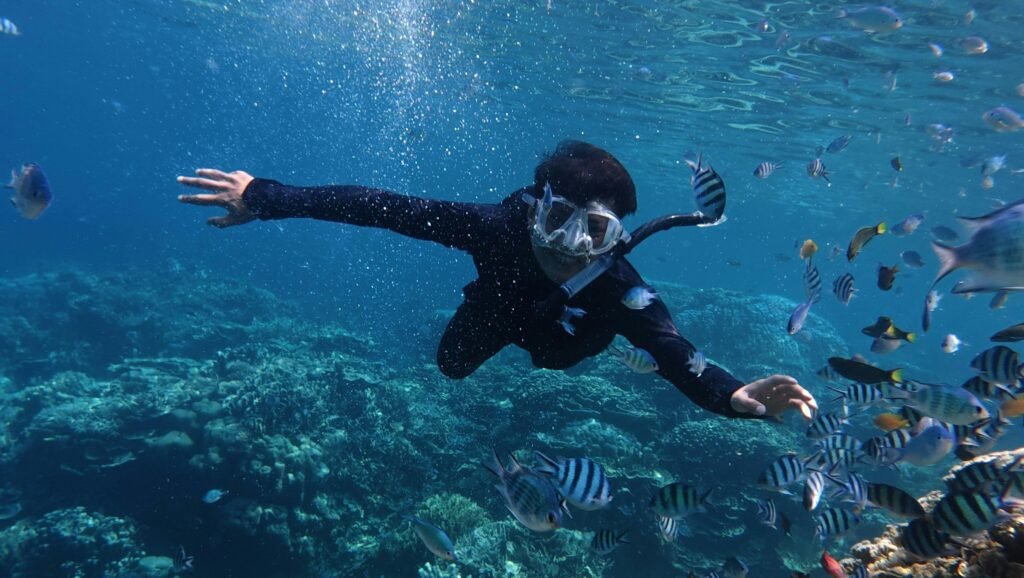
Whether you’re snorkelling in a sheltered bay or watching the water as you sail between islands, discovering the marine life of the Bay of Islands adds another dimension to your time on the water.
Here are some of the fish you might encounter in this special part of New Zealand.
Snapper: A Familiar Face in New Zealand Waters
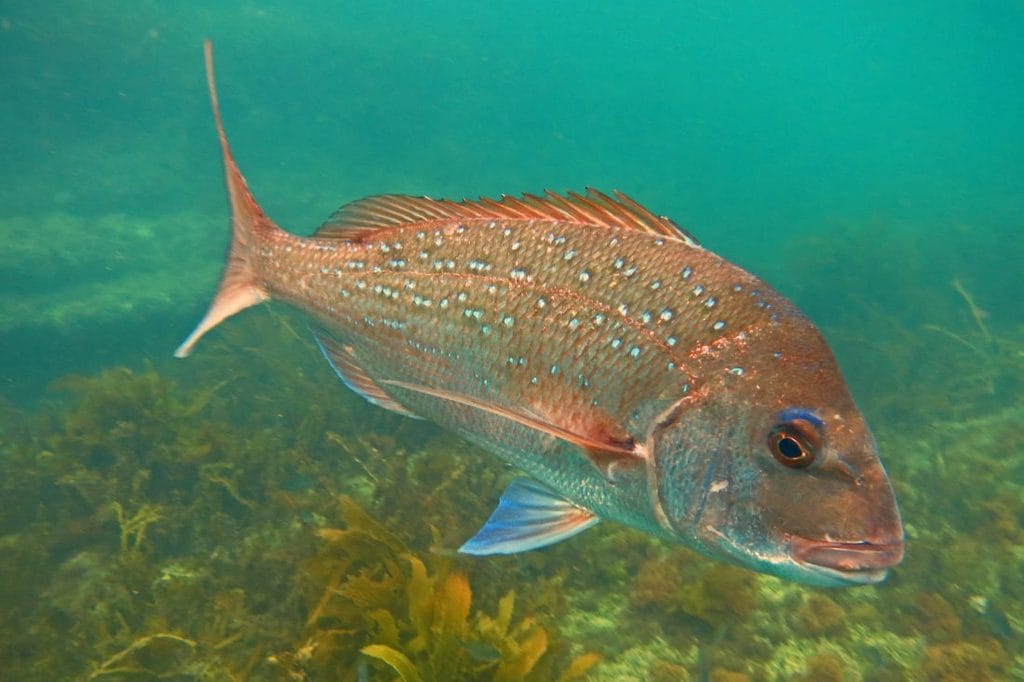
Tāmure (Snapper) is one of New Zealand’s best-known coastal fish and an important part of the Bay of Islands’ marine environment.
Recognisable by their pinkish-silver bodies, blue spots and strong jaws, snapper inhabit a range of underwater environments, including sandy seabeds, reefs and coastal areas.
Young snapper often feed on small crustaceans and other invertebrates, while larger fish have a varied diet. Although they’re well known among recreational fishers, seeing one underwater is a different experience altogether.
Where to look: Around suitable reef habitats and coastal waters. Sightings while snorkelling depend on water clarity, depth and conditions.
Kelpfish: Masters of Disguise
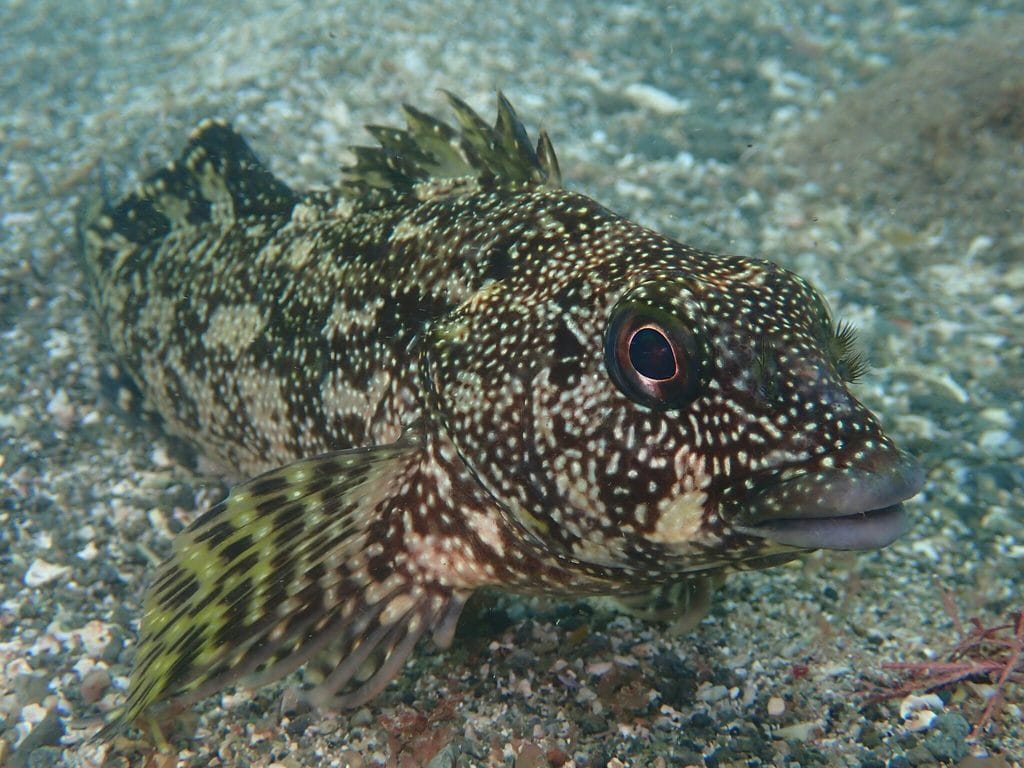
Look closely among the seaweed and rocky reefs and you may spot small fish perfectly camouflaged against their surroundings. Kelpfish are adapted to life around seaweed-covered rocks and other coastal habitats, where their colouring helps them blend into the underwater landscape.
Rather than swimming constantly in open water, many kelpfish spend their time close to shelter, making them fascinating to observe when snorkelling.
Where to look: Around rocky shores, seaweed and reef habitats. Move slowly and look carefully among the kelp and rocks — some of the most interesting marine life is easy to miss at first glance.
Blue Maomao: A Flash of Blue Beneath the Waves
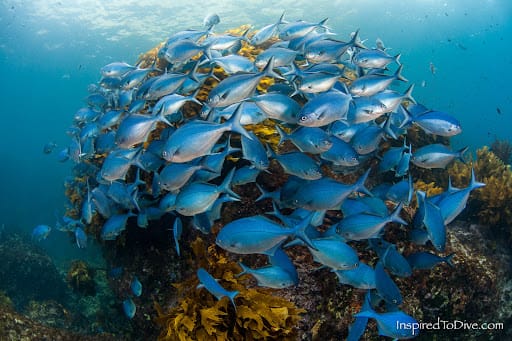
One of the beautiful sights to look out for when exploring New Zealand’s coastal waters is the blue maomao. These striking fish have slender bodies with a vibrant blue-green colour that catches the light as they move through the water.
Blue maomao often gather in schools around rocky reefs, where they swim together in the current and feed on plankton. Watching a school move as one against the backdrop of a reef is a memorable sight for snorkellers and divers.
Where to look: Around rocky reefs and underwater structures, particularly where currents bring food into the water. Look for schools moving above the reef or gathering in the blue water nearby.
Parore: The Coastal Fish of New Zealand
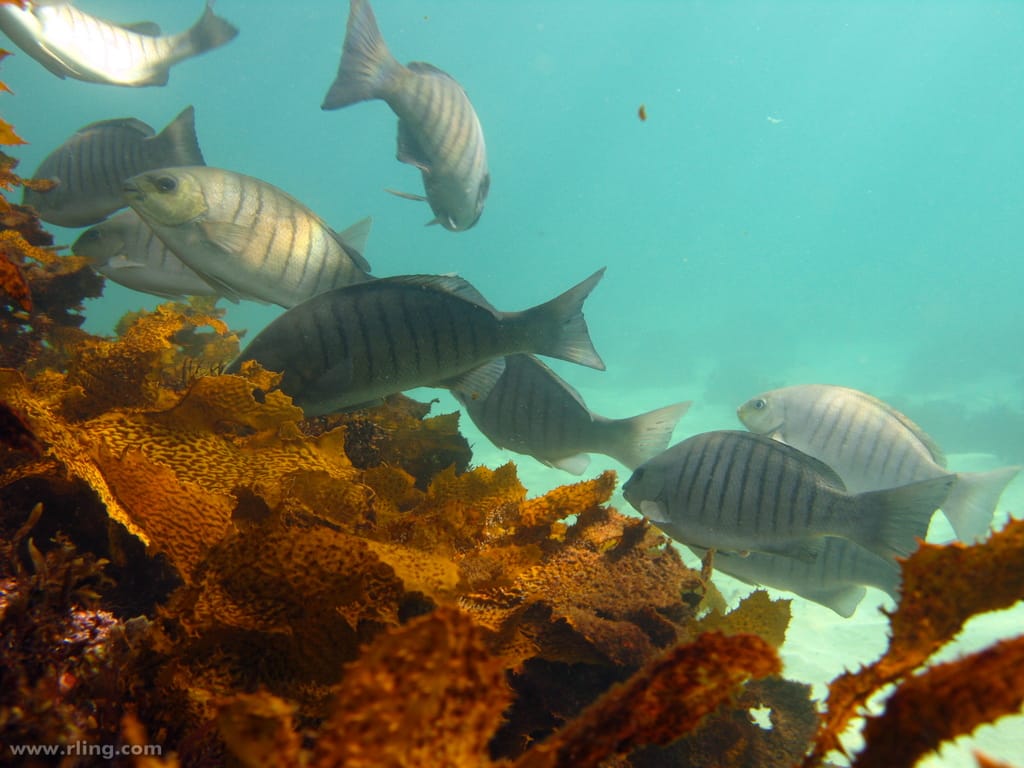
Parore, also known as blackfish, are a common coastal fish found around northern New Zealand, including the Bay of Islands. They have deep, oval-shaped bodies, dark grey to greenish colouring and distinctive thick lips.
Often seen in schools, parore are particularly interesting because of their diet. They feed largely on seaweed and algae, grazing around rocky reefs and other coastal habitats.
While they might not have the bright colours of some reef fish, watching a school of parore move through clear water is a lovely part of exploring New Zealand’s underwater world.
Where to look: Around rocky shorelines, reef edges and areas with abundant seaweed. Look for schools feeding close to the rocks, particularly in sheltered coastal waters.
Redbanded Perch: Colourful Reef Fish
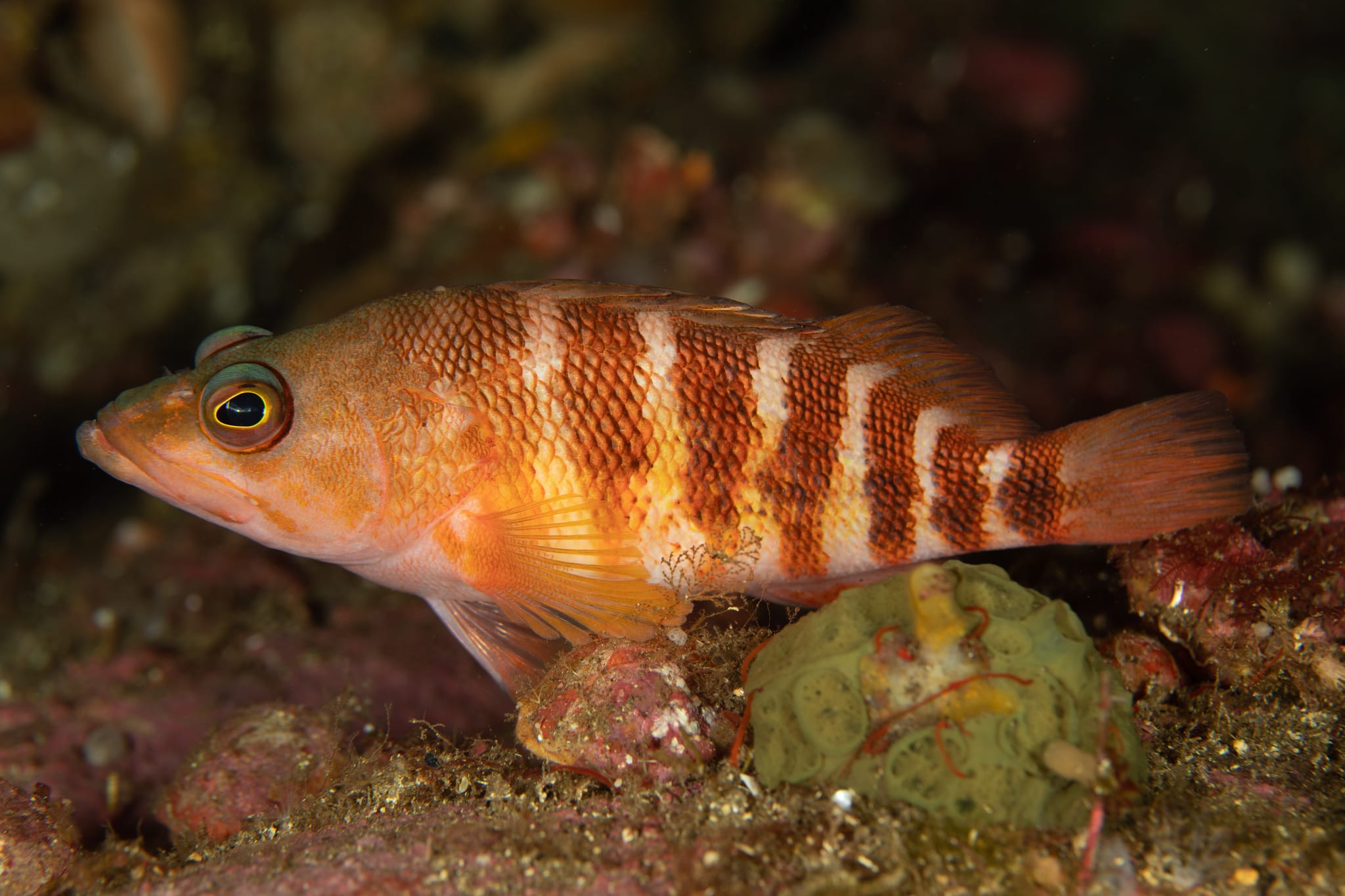
The redbanded perch is a colourful fish found around rocky reefs in New Zealand. It has a pale body marked with distinctive reddish-brown bands, making it an interesting fish to look out for when exploring the underwater world.
Redbanded perch are usually found close to rocky reefs, where they can blend into their surroundings. If you’re snorkelling in suitable conditions, keep an eye on the reef and crevices for a glimpse of this distinctive fish.
Where to look: Rocky reefs and reef edges around the Bay of Islands.
Snorkelling tip: Move slowly and observe from a respectful distance. Fish are easier to spot when you take your time and avoid disturbing their habitat.
Sandager’s Wrasse: A Colourful Reef Resident
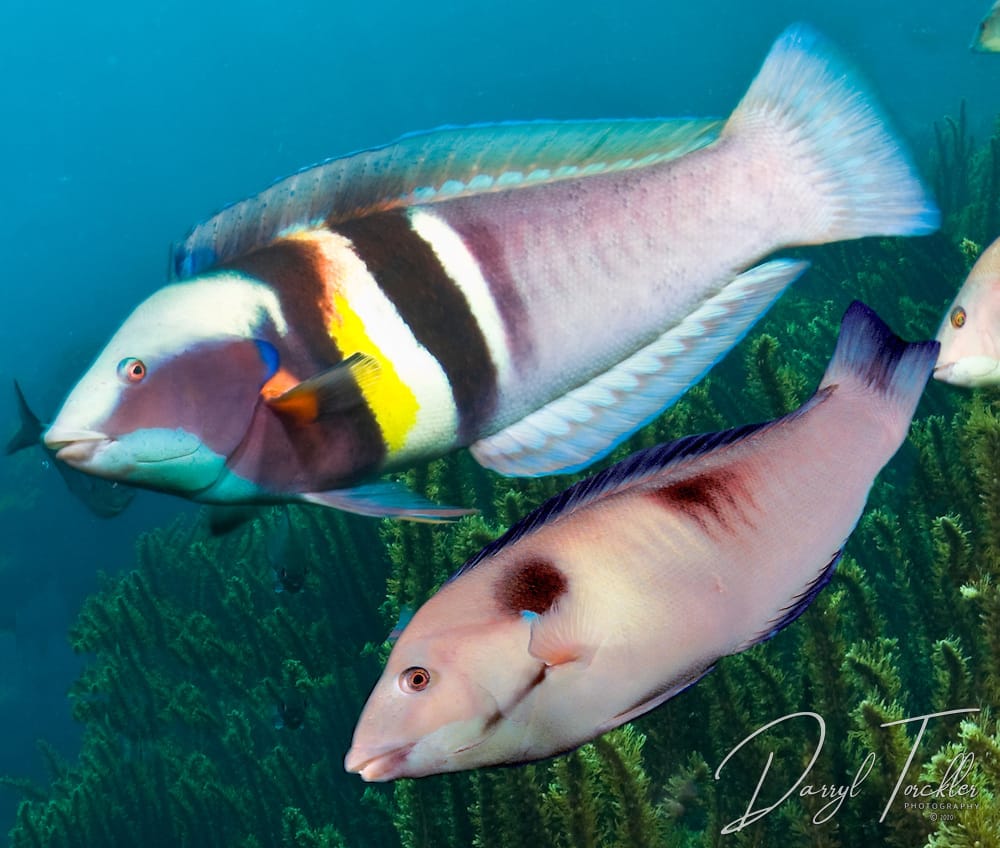
Sandager’s wrasse is a New Zealand reef fish found around rocky reefs and kelp-covered areas. Like many wrasses, its colouring can vary, and males and females may look quite different. This makes it an interesting fish to spot while exploring the Bay of Islands underwater.
Often seen moving around rocky reef habitats, Sandager’s wrasse searches for small invertebrates among the rocks and seaweed.
Where to look: Rocky reefs and seaweed-covered areas in suitable coastal waters.
Kahawai: Fast-Moving Fish of the Open Water
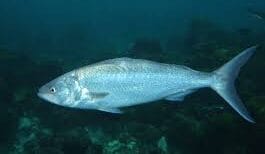
Kahawai are energetic schooling fish often associated with coastal waters and feeding activity near the surface.
Their silvery bodies and dark, striped backs help distinguish them from other common coastal species. When schools of small fish gather near the surface, kahawai may be close by, feeding on baitfish.
If you notice birds diving repeatedly into the water or fish breaking the surface, it can be a sign of feeding activity beneath the waves.
Where to look: In coastal waters and around schools of baitfish. Keep an eye on the surface while sailing between the islands.
Yellowtail Kingfish: Powerful Coastal Predators
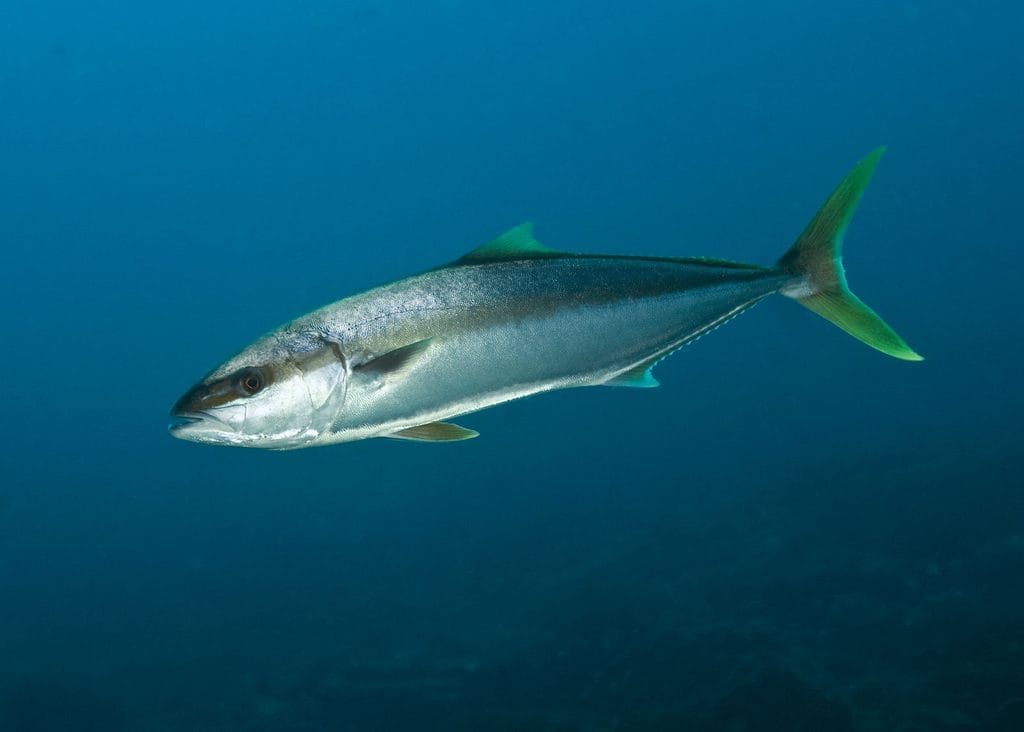
Haku (Yellowtail Kingfish) are impressive, fast-swimming predators found around New Zealand’s coastal waters, particularly in the north.
Their streamlined bodies, greenish backs and distinctive yellow tails make them easy to recognise. Kingfish are often associated with strong currents, rocky reefs and underwater structures where smaller fish gather.
They’re a favourite among experienced anglers because of their size, strength and speed. Encountering one in the wild can be an unforgettable experience.
Where to look: Around rocky reefs, headlands and areas with strong tidal flows. Kingfish sightings are never guaranteed, but the waters around Northland provide suitable habitat for this species.
The Smaller Fish That Bring Reefs to Life
Not all marine life is large or easy to spot. Sometimes the most interesting discoveries are the smaller fish moving among rocks, seaweed and reef structures.
Depending on the habitat, you may encounter species such as triplefins, wrasses and other small coastal fish. Their colours, patterns and movements can make snorkelling a rewarding way to explore the underwater environment.
Take your time, move slowly and avoid stirring up the seabed. The more carefully you look, the more you may notice.
Water clarity, visibility, depth and weather all affect what you can see, so every snorkelling stop can be different.
More Than Fish: Discover the Bay’s Underwater World
The marine environment is about much more than fish. Rocky shores, underwater reefs and sheltered coves provide habitats for a wide variety of marine life.
Depending on where you explore, you may notice sea stars, kina, crabs, shellfish and other fascinating creatures.
These animals all play a role in the wider marine ecosystem. Even the smallest organisms contribute to the health of the underwater environment.
If you’re exploring the water, observe marine life without touching, collecting or disturbing it. This helps protect the environment and allows others to enjoy the same experience.
Protecting the Marine Environment
The Bay of Islands is a valuable natural environment, enjoyed by locals, visitors, fishers and marine wildlife alike. Protecting it helps ensure that future generations can continue to experience its remarkable marine life.
Here are a few simple ways to help:
- Respect marine life: Observe fish and other animals without chasing, touching or feeding them.
- Take your rubbish with you: Keep plastic, fishing line and other waste out of the water.
- Anchor carefully: Avoid damaging reefs, seagrass and other sensitive habitats.
- Respect protected areas: Fishing and collecting marine life are prohibited in marine reserves.
- Follow local fishing rules: If you’re fishing independently, check the latest size limits, daily limits and area restrictions before heading out.
Every responsible choice helps protect the marine environment. You can find current recreational fishing rules through Fisheries New Zealand.
Experience the Marine Life of the Bay of Islands with Bayscapes
One of the best ways to appreciate the Bay of Islands is to experience it from the water.
Aboard Hibiscus Star, our spacious 40-foot sailing catamaran, you’ll travel between the islands, take in the coastal scenery and have the opportunity to enjoy the water during our island stop.
Our shared day sailing cruise includes time to swim, snorkel or paddleboard, depending on conditions and your preferences. We provide snorkelling equipment and paddleboards onboard, so you can enjoy the experience without needing to bring your own gear.
Prefer a more personalised day? Our private sailing charters offer a flexible way to explore the Bay with your own group.
Whether you’re an enthusiastic snorkeller or simply curious about what’s beneath the surface, there’s plenty to appreciate in this beautiful part of Northland.
Ready to explore the Bay of Islands?
Discover Bayscapes Sailing Charters and experience the islands, clear coastal waters and natural beauty of the Bay from aboard Hibiscus Star.
Frequently Asked Questions
What fish live in the Bay of Islands?
The region’s coastal waters support species including snapper, yellowtail kingfish, kahawai along with many smaller reef and coastal fish.
Can you see fish while snorkelling in the Bay of Islands?
Yes, you may see fish while snorkelling in suitable coastal habitats. What you encounter depends on the location, water clarity, season and conditions on the day.
Is the Bay of Islands good for snorkelling?
The Bay offers sheltered coves and coastal habitats that can be enjoyable for snorkelling when conditions are suitable. Visibility and water movement vary, so always follow safety advice and your skipper’s guidance.
Does Bayscapes Charters provide snorkelling equipment?
Yes. Snorkelling equipment is available onboard our shared day sailing cruise, along with paddleboards for guests to enjoy during the island stop.
Can I go fishing on a Bayscapes Sailing Charter?
Our shared day and private sailing charters focus on sailing, sightseeing and enjoying time around the islands. Fishing is not permitted onboard, as we prefer to observe and appreciate the marine life rather than catch it. We encourage our guests to enjoy seeing fish in their natural environment while exploring the beautiful Bay of Islands.
What happens if the weather is bad?
Weather and sea conditions play an important part in sailing. We monitor conditions carefully and make decisions based on the safety and comfort of our guests. If conditions mean your trip cannot safely go ahead, we’ll discuss the available options with you.
What should I bring for snorkelling?
Bring your swimwear, a towel and a change of clothes if you’d like one after swimming. A light jacket is also useful when you’re back on deck, as it can feel cooler on the water.